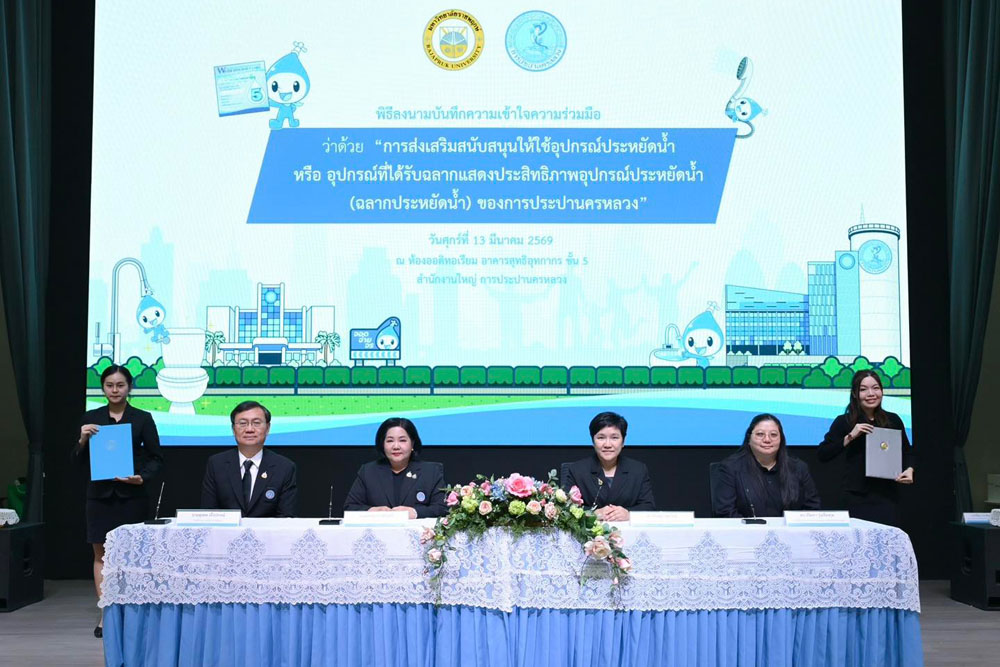
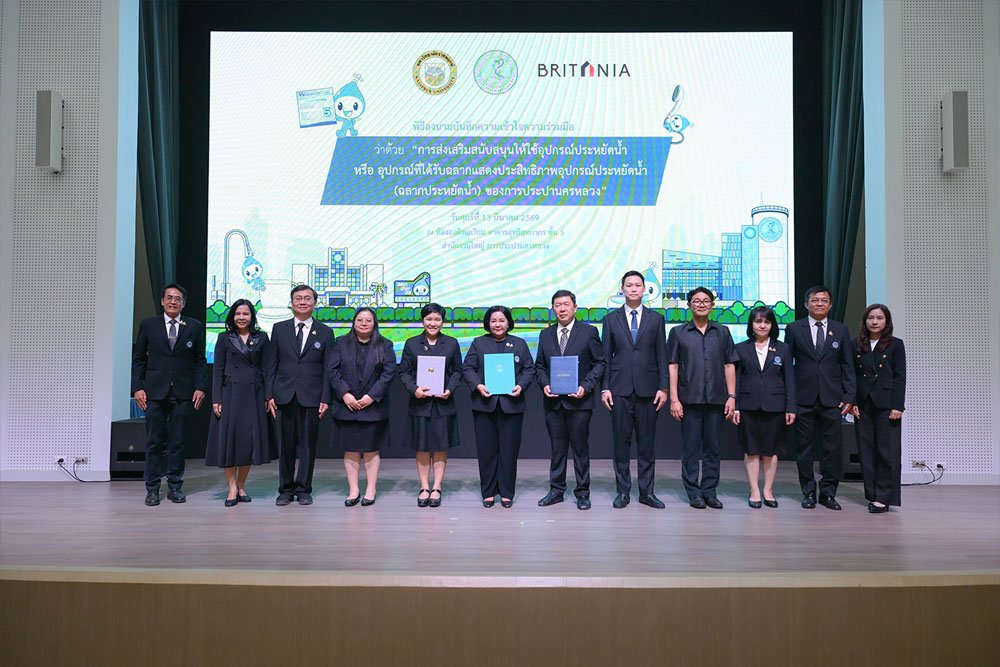
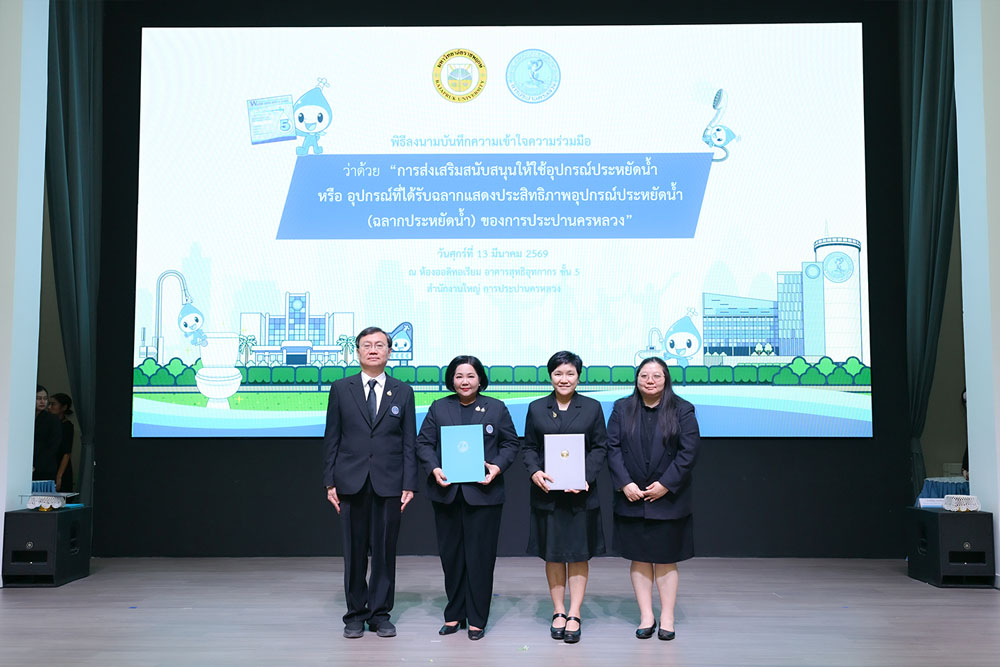
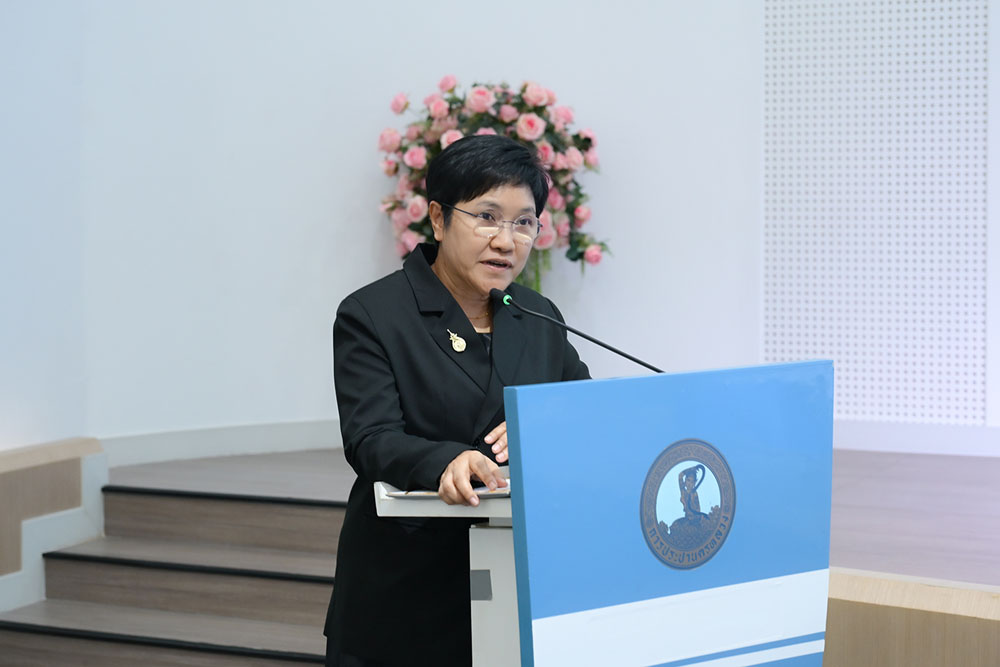
BANGKOK, March 13, 2026 – The Metropolitan Waterworks Authority (MWA) and Rajapruk University (RPU) have officially entered into a Memorandum of Understanding (MOU) to promote the adoption of water-saving technologies and foster long-term environmental sustainability within residential and academic sectors.
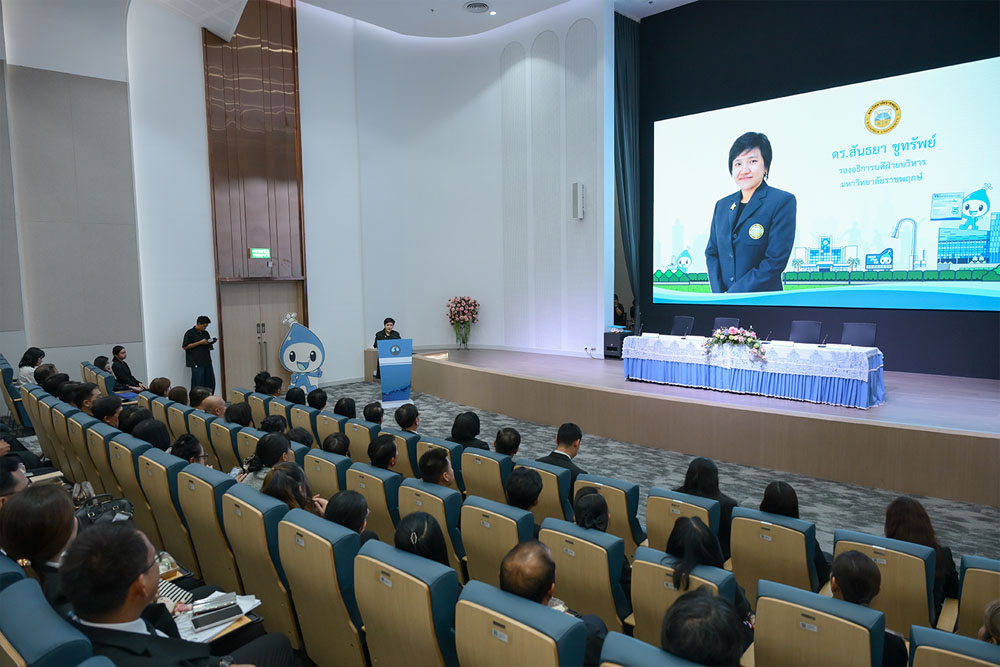
The signing ceremony, held at the Sutthi Uthakakon Building, MWA Headquarters, featured Ms. Suwara Thawitchasri, Governor of the MWA, and Dr. Suntaya Choosup, Vice President for Administration at Rajapruk University. This collaboration signifies a unified effort between the public sector and academia to drive the utilization of MWA-certified water-efficient appliances.
Commitment to ESG and Global Goals
Ms. Suwara Thawitchasri, emphasized that the MWA is dedicated to an Environmental, Social, and Governance (ESG) framework. Beyond ensuring high-standard water production, the MWA is prioritizing energy efficiency, water loss reduction, and the promotion of water-saving innovations through its official “Water-Saving Label” project.
“This partnership is instrumental in achieving a balance in responsible water consumption while simultaneously supporting the Sustainable Development Goals (SDGs) on both a national and global scale,” the Governor stated.
Fostering a Culture of Environmental Stewardship
Representing Rajapruk University, Dr. Suntaya Choosup highlighted the institution’s focus on responsible resource management and the creation of an eco-conscious learning environment.
“Collaborating with the MWA allows us to elevate our campus resource management, significantly reducing water waste and utility expenditures. More importantly, it reinforces an organizational culture that values natural resources among our faculty, staff, and students,” Dr. Suntaya remarked.
Scalable Impact and Future Outlook
To date, the MWA has certified nearly 300 models of water-saving products. Through strategic alliances with various sectors—particularly real estate, where these innovations have been implemented in over 16,000 residential projects—the MWA continues to demonstrate the collective power of multi-sectoral cooperation. This initiative stands as a testament to the commitment of both the MWA and RPU in securing the nation’s natural resources and environmental heritage for future generations.